It comes as no surprise that the Federal Transit Administration wants to recoup nearly $270 million that New Jersey spent before Gov. Chris Christie killed the ARC tunnel project because it would have exposed the state to billions of dollars in cost overruns.
The same agency that determines that New Jersey was required to pay in the first place is the same agency that determined that their original decision was correct. That's how these things work, but it doesn't mean the fight over the money is over by any stretch.
It ignores that Christie will still end up saving New Jersey taxpayers billions in dollars in exposure to cost overruns - overruns that the federal government refused to cover, even as it acknowledged the potential overruns could exceed their estimates and that NJ Transit was incapable of providing cost containment.
It is also instructive to look across the Hudson River to the Port Authority's PATH Transit hub and see what happens when cost overruns hit hard. That project was initially expected to cost $2.2 billion, and efforts were made to try and keep the cost from going above $2.8 billion. We're now at $3.4 billion and it is expected to eventually cost $3.8 billion. Those are costs that will be passed on to Port Authority customers in one form or another - whether it's higher rents for tenants, higher fares on PATH, or higher tolls at Port Authority bridges and tunnels.
New Jersey needs infrastructure improvements, but it cannot and should not break its bank to do so - and interstate projects should be completed with interstate assistance. That was sorely lacking in the ARC tunnel project, where New York was not putting up any funds - and the feds refused to backstop the cost overruns.
The successor project, the Gateway tunnel has a better arrangement for funding, and New Jersey taxpayers will not be on the hook for the overruns.
So, in the end, New Jersey taxpayers benefit from the killing of the ARC tunnel, Amtrak benefits with a tunnel project that does what the ARC was originally intended to do - expand Amtrak and NJ Transit access to Manhattan along with high speed rail improvements, and provide better access and coordination between the relevant agencies that are to carry out the construction of the project.
It's also instructive that the New Jersey congressional delegation isn't exactly pulling out the stops to get the FTA to back off the repayment - they'd rather see Gov. Christie embarrassed by all this rather than fighting to protect NJ taxpayers from a project that was ill-conceived by Gov. Corzine and which would have saddled NJ Transit with a boondoggle to rival that of the Secaucus Transfer (all while NJ Transit lacks an operating budget to run increased service to boot).
Showing posts with label Robert Menendez. Show all posts
Showing posts with label Robert Menendez. Show all posts
Tuesday, May 03, 2011
Tuesday, February 08, 2011
Digesting the Politics of the ARC Tunnel Successor's
After Gov. Chris Christie killed the ARC tunnel project that would have put New Jersey taxpayers on the hook for anywhere from $1 to $5 billion in cost overruns and built a tunnel project that wouldn't accomplish anything near as much as its boosters claimed, Democrats Frank Lautenberg and Bob Menendez are hoping to build a tunnel project that would accomplish most everything that the ARC tunnel proponents hoped to achieve, but it will cost.
It's going to cost a minimum of $10 billion and most sources indicate that the cost will be at least $13.5 billion. That's due in part to the alignment of the tunnel to bring trains into a newly expanded cavern adjacent to Penn Station. The tunnel would have access to Penn Station and lead to high speed rail capabilities through New York City. The price tag also apparently includes the $1.8-$1.9 billion Portal Bridge project, which shouldn't have been included in the overall price tag and should have been budgeted separately since that replacement bridge needs to go ahead regardless of what decision is made on the tunnel projects.

Lautenberg and Menendez are pushing an Amtrak solution because it would attempt to cut Christie out of the decision-making process, even though Christie was absolutely right to demand that the federal government and New York pick up additional costs on this interstate project.
NJ Transit and the Port Authority will again be asked to kick in financing to bring the project to fruition, and Gov. Christie can still affect the outcome through his control over those agencies.
Still, no one is asking why this project, which is similar to one of the alternatives under the ARC tunnel design studies is costing so much more than those earliest projections. Lautenberg and Menendez have effective replaced a costly boondoggle with an even more expensive project and still haven't managed to get New York's congressional delegation on board to support jointly requesting and financing the project. That's a huge failure on their part since New York will garner a tremendous benefit while New Jersey continues picking up the costs from the project.
A new tunnel is absolutely essential to the long term growth in the region and rebuilding critical infrastructure. However, the atrocious state budgets on both sides of the Hudson River means that neither New Jersey nor New York can truly afford to put up the funds - either alone or together without significant federal aid. That means getting Congress and the President on board with this project.
You can bet that fiscal hawks in Congress will swarm over the fact that this new iteration of the tunnel plan is even more costly than the canceled ARC tunnel, and they're going to focus on the price tag, rather than the differences in the project that would bring significantly more benefits to mass transit and intercity transportation. Add to the fact that Republicans in Congress dislike Amtrak, and the odds that this project gets off the ground are slim even with the President's backing.
UPDATE:
The Star Ledger gives a cautious thumb's up for the Gateway tunnel proposal, but not without first lambasting Christie for killing the ARC tunnel and using monies that were originally devoted to the ARC tunnel to plug the Transportation Trust Fund shortfall.
I'm not surprised by that reading, but the paper ignores that the New Jersey Senators failed to find the funding to make the ARC tunnel work when Christie noted that NJ taxpayers would be on the hook for all the overruns.
The paper claims that the new proposal will result in fewer trains heading into Manhattan than the ARC tunnel, but that's not entirely accurate either. It would result in more Amtrak high speed trains going into Manhattan along with a smaller contingent of NJ Transit trains than the ARC tunnel provided. The capacity is actually likely to be higher than the ARC tunnel and will link to Sunnyside Yards for storage.
Another consideration is that the Amtrak head, Anthony Coscia, is the former head of the Port Authority, so he knows the political machinations at work in both states.
The paramount question, however, is how and when Amtrak and its partners can obtain the necessary funding to make the project a reality. The reports already indicate that the Gateway tunnel can use the ARC tunnel entrance in New Jersey, so there's more than enough evidence that New Jersey wont have to repay the $271 million for canceling the ARC tunnel, when the engineering and construction work undertaken will be utilized in the new project.
Another question is why everyone continues conflating the Portal Bridge project with the tunnel proposals. They can, and should be, independent projects and while both need to be undertaken, the Portal Bridge project doesn't have the rancorous funding problems that the tunnel has.
It's going to cost a minimum of $10 billion and most sources indicate that the cost will be at least $13.5 billion. That's due in part to the alignment of the tunnel to bring trains into a newly expanded cavern adjacent to Penn Station. The tunnel would have access to Penn Station and lead to high speed rail capabilities through New York City. The price tag also apparently includes the $1.8-$1.9 billion Portal Bridge project, which shouldn't have been included in the overall price tag and should have been budgeted separately since that replacement bridge needs to go ahead regardless of what decision is made on the tunnel projects.

Lautenberg and Menendez are pushing an Amtrak solution because it would attempt to cut Christie out of the decision-making process, even though Christie was absolutely right to demand that the federal government and New York pick up additional costs on this interstate project.
NJ Transit and the Port Authority will again be asked to kick in financing to bring the project to fruition, and Gov. Christie can still affect the outcome through his control over those agencies.
Still, no one is asking why this project, which is similar to one of the alternatives under the ARC tunnel design studies is costing so much more than those earliest projections. Lautenberg and Menendez have effective replaced a costly boondoggle with an even more expensive project and still haven't managed to get New York's congressional delegation on board to support jointly requesting and financing the project. That's a huge failure on their part since New York will garner a tremendous benefit while New Jersey continues picking up the costs from the project.
A new tunnel is absolutely essential to the long term growth in the region and rebuilding critical infrastructure. However, the atrocious state budgets on both sides of the Hudson River means that neither New Jersey nor New York can truly afford to put up the funds - either alone or together without significant federal aid. That means getting Congress and the President on board with this project.
You can bet that fiscal hawks in Congress will swarm over the fact that this new iteration of the tunnel plan is even more costly than the canceled ARC tunnel, and they're going to focus on the price tag, rather than the differences in the project that would bring significantly more benefits to mass transit and intercity transportation. Add to the fact that Republicans in Congress dislike Amtrak, and the odds that this project gets off the ground are slim even with the President's backing.
UPDATE:
The Star Ledger gives a cautious thumb's up for the Gateway tunnel proposal, but not without first lambasting Christie for killing the ARC tunnel and using monies that were originally devoted to the ARC tunnel to plug the Transportation Trust Fund shortfall.
I'm not surprised by that reading, but the paper ignores that the New Jersey Senators failed to find the funding to make the ARC tunnel work when Christie noted that NJ taxpayers would be on the hook for all the overruns.
The paper claims that the new proposal will result in fewer trains heading into Manhattan than the ARC tunnel, but that's not entirely accurate either. It would result in more Amtrak high speed trains going into Manhattan along with a smaller contingent of NJ Transit trains than the ARC tunnel provided. The capacity is actually likely to be higher than the ARC tunnel and will link to Sunnyside Yards for storage.
Another consideration is that the Amtrak head, Anthony Coscia, is the former head of the Port Authority, so he knows the political machinations at work in both states.
The paramount question, however, is how and when Amtrak and its partners can obtain the necessary funding to make the project a reality. The reports already indicate that the Gateway tunnel can use the ARC tunnel entrance in New Jersey, so there's more than enough evidence that New Jersey wont have to repay the $271 million for canceling the ARC tunnel, when the engineering and construction work undertaken will be utilized in the new project.
Another question is why everyone continues conflating the Portal Bridge project with the tunnel proposals. They can, and should be, independent projects and while both need to be undertaken, the Portal Bridge project doesn't have the rancorous funding problems that the tunnel has.

Monday, February 07, 2011
Sens. Lautenberg and Menendez Attempt To Resuscitate Trans-Hudson Tunnel Project
After Gov. Chris Christie killed the ARC tunnel project because New Jersey taxpayers would be on the hook for all cost overruns, and it was already estimated to go $1 billion over the $8.7 billion budget, Sen. Frank Lautenberg was among Christie's harshest critics. He complained about how commuters would be harmed by the loss of a key project.
Never mind that Christie was absolutely right to protect taxpayers from a project that would benefit New Jersey and New York, but put the entire risk of overruns on New Jersey while New York contributed no funds to the project. Even federal efforts to keep the project on track amounted to nothing more than additional loan guarantees to cover a portion of cost overruns.
The project, which was originally proposed as a $5 billion project, had already ballooned to $8.7 billion, and the most conservative estimate for overruns was $1 billion beyond that amount. Other estimates could have pushed the New Jersey share to $5 billion.
So, now Lautenberg and Menendez are back touting that they've got another plan to build a trans-Hudson river rail tunnel.
This time, they've got Amtrak on board with the proposal, and it would lead to an expanded Penn Station, rather than a dead-ended annex under Herald Square.
The cost of the project is still huge, and they expectation is that the tunnel will run $10 billion or more, but the issue will be who will cover what costs. With Amtrak involved this time, there will be additional cost sharing, and this proposal shows that the NJ Transit claim that the new tunnels could not be built to Penn Station were nothing but bureaucratic domain protection. It wasn't based on anything but NJ Transit trying to expand its own infrastructure at tremendous cost even though the agency's operating budget is incapable of handling the existing traffic.
NJ Transit's dealing with an aging infrastructure and an operating budget that can't cover the existing schedule. I have serious doubts over its scheduling claims from North Jersey when there have been a reduction in train service, and debt service on the Secaucus Transfer continues to be a drain all while the proposed tunnel would include a Transfer bypass allowing trains to travel directly into Manhattan from North Jersey. That would severely limit the ridership that would utilize the Transfer unless the existing parking facilities are greatly expanded.
What remains to be seen is who will be paying for what and what the New Jersey share will be. Moreover, the key questions will be whether New York actually ponies up any funds to cover construction costs, and who will bear the risk of cost overruns.
This new project is already starting at a much higher price point, and it's more than double the original ARC tunnel cost projection.
UPDATE:
I wonder if the costs for the new tunnel project are including the Portal Bridge costs, which at last check was a totally separate and distinct project that was scheduled to cost $1.344 billion. Construction is scheduled to begin next year and run through 2017 in building two new bridges and five tracks to handle traffic on the Northeast Corridor as well as reconfigure about 10 miles of track between Newark and Secaucus Transfer to handle high speed rail (80-90 mph, from the current 60 mph limitations). That work has to be done regardless of what happens with the tunnel project, and monies were already set aside by Amtrak, the ARRA of 2009, and other funding sources to get the project underway.
It's notable that there isn't any mention of where the money is coming from under the new proposal, and it's further notable that neither of New York's senators, including Chuck Schumer were around to agree on a joint New York/New Jersey plan to fund the project. That would once again suggest that New York is not going to be putting up monies to get the project done.
There's a further question of how exactly this new proposal (which actually is a step back to the original intent of the ARC tunnel when first proposed) will take the sails out of the study by New York City to extend the 7 Line to Secaucus.
UPDATE:
Reuters is reporting that the cost for the project would be $13.5 billion. That would put it significantly above the costs for the canceled ARC tunnel, and more than double the original cost estimate for the ARC tunnel when first proposed despite being little different from the original design and scope. Even if the $13.5 billion includes the $1.344 billion for the Portal Bridge, we're talking about the upper range from the cost estimates that led Christie to kill the project.
As a reminded, when the ARC tunnel was first proposed years ago, it was seen as a $5 billion project. By the time Christie killed it last year, it was up to $8.7 billion but widely expected to go at least $1 to $5 billion over that budget.
Now, we're looking at a $13.5 billion to achieve the same goal as the original budget and it's riding on the hope that President Obama's Amtrak capital initiatives get adopted.
The one question that seems to be missing from the reporting is how and why this latest attempt to build new capacity is costing so much more than the original project? Those are the unanswered questions that reporters have yet to ask in any critical fashion.
UPDATE:
Digging through the Amtrak Northeast Corridor master plan, Amtrak and NJ Transit believe that as of May 2010 that the cost of the Portal Bridge will cost $1.8 billion (page 29) or $1.9 billion (page 101 overall/page 28 of Part II), which is significantly above the $1.344 billion as per the Portal Bridge site information. There's a further backlog of $214 million to rehabilitate the existing two Hudson River tunnels and rehabilitation of the overhead catenary system and replacing electrical substations would cost another $350 million. That's despite a $453 million infusion of federal stimulus monies. Overall, Amtrak says that they're short $5.2 billion to bring the system into a state of good repair.
Never mind that Christie was absolutely right to protect taxpayers from a project that would benefit New Jersey and New York, but put the entire risk of overruns on New Jersey while New York contributed no funds to the project. Even federal efforts to keep the project on track amounted to nothing more than additional loan guarantees to cover a portion of cost overruns.
The project, which was originally proposed as a $5 billion project, had already ballooned to $8.7 billion, and the most conservative estimate for overruns was $1 billion beyond that amount. Other estimates could have pushed the New Jersey share to $5 billion.
So, now Lautenberg and Menendez are back touting that they've got another plan to build a trans-Hudson river rail tunnel.
This time, they've got Amtrak on board with the proposal, and it would lead to an expanded Penn Station, rather than a dead-ended annex under Herald Square.
The cost of the project is still huge, and they expectation is that the tunnel will run $10 billion or more, but the issue will be who will cover what costs. With Amtrak involved this time, there will be additional cost sharing, and this proposal shows that the NJ Transit claim that the new tunnels could not be built to Penn Station were nothing but bureaucratic domain protection. It wasn't based on anything but NJ Transit trying to expand its own infrastructure at tremendous cost even though the agency's operating budget is incapable of handling the existing traffic.
The Gateway tunnel would allow 13 additional NJ Transit trains per hour — from 20 to 33 — and eight more Amtrak trains. The ARC project would have allowed 25 extra NJ Transit trains per hour.The $1.3 billion Portal Bridge project should be going ahead regardless of what happens with the tunnel project, because it is one of the worst bottlenecks on the entire Northeast Corridor, and that work isn't contingent on what happens with the tunnel project.
"I’m in my late 60s, and I was just hoping and praying I’d see the day when there would be another Hudson River tunnel," New Jersey transportation expert Martin E. Robins said. "My hopes have been rekindled."
Many hurdles will have to be overcome, including finding federal and local funding for a project that could cost upwards of $10 billion. But Amtrak officials say they believe the tunnel fits in well with President Obama’s vision for infrastructure improvements in America and high-speed rail in the Northeast Corridor from Boston to Washington, D.C.
gateway-tunnel-project.jpgView full size
The hope is to have the Gateway tunnel built in a decade.
News of the announcement was first reported today on NJ.com, The Star-Ledger’s real-time news and information site.
Amtrak this week is expected to ask the federal government to fund a $50 million engineering study on the Gateway plan. The project also could benefit from the engineering work done previously for ARC.
Amtrak President and Chief Executive Officer Joseph Boardman, Amtrak board member Anthony Coscia, Lautenberg and Menendez are expected to present the alternative tunnel plans during a news conference at 11 a.m. Monday at the Hilton Newark Penn Station.
Amtrak had intended to build another tunnel to improve capacity in the nation’s most congested rail corridor, but not until 2040. The killing of the ARC tunnel expedited the Gateway tunnel plans.
Citing projected cost overruns that would leave New Jersey taxpayers on the hook, Christie pulled the plug on the nation’s largest public works project on Oct. 27.
Lautenberg immediately began working with Amtrak to revive the trans-Hudson rail tunnel project, which he says will benefit New Jersey’s commuters by giving them transfer-free train rides to prosperous jobs in Manhattan, increase property values along the rail line and put contractors to work.
"New Jersey is facing a transportation crisis," he said. "Our commuters are fed up with train delays that make them late to work and endless traffic that traps them on our highways when they want to be home with their families. When the ARC tunnel was canceled, it was clear to me that we couldn’t just throw up our hands and wait years to find another solution."
New Jersey always rises above challenges, Menendez said in a statement tonight. "While some choose to do nothing and accept delays, the people of New Jersey cannot, will not, and must not wait. We are moving full steam ahead with this strong investment in New Jersey and the region. We are on a path to create good-paying jobs and move people and goods more quickly."
Some transportation officials think the Gateway plan makes more sense than expanding the No. 7 subway line from New York City to Secaucus Junction, an idea floated over the last three months by the staff of New York Mayor Michael Bloomberg. Under Amtrak’s best-case scenario, the No. 7 line would also be extended to Penn Station, between 31st and 33rd streets, two blocks west of the Empire State Building.
Along with the Gateway project would be a plan to raise and replace the decrepit, century-old train Portal Bridge between Kearny and Secaucus over the Hackensack River. The condition of the bridge limits train speeds and the span is so low that it often has to be opened to allow commercial boats to pass under, causing more delays.
When the ARC project was being considered in the 1990s, Amtrak was in a fight for survival with the federal government and couldn’t assist New Jersey. The Gateway tunnel represents a historic change of direction for Amtrak, Robins said.
NJ Transit's dealing with an aging infrastructure and an operating budget that can't cover the existing schedule. I have serious doubts over its scheduling claims from North Jersey when there have been a reduction in train service, and debt service on the Secaucus Transfer continues to be a drain all while the proposed tunnel would include a Transfer bypass allowing trains to travel directly into Manhattan from North Jersey. That would severely limit the ridership that would utilize the Transfer unless the existing parking facilities are greatly expanded.
What remains to be seen is who will be paying for what and what the New Jersey share will be. Moreover, the key questions will be whether New York actually ponies up any funds to cover construction costs, and who will bear the risk of cost overruns.
This new project is already starting at a much higher price point, and it's more than double the original ARC tunnel cost projection.
UPDATE:
I wonder if the costs for the new tunnel project are including the Portal Bridge costs, which at last check was a totally separate and distinct project that was scheduled to cost $1.344 billion. Construction is scheduled to begin next year and run through 2017 in building two new bridges and five tracks to handle traffic on the Northeast Corridor as well as reconfigure about 10 miles of track between Newark and Secaucus Transfer to handle high speed rail (80-90 mph, from the current 60 mph limitations). That work has to be done regardless of what happens with the tunnel project, and monies were already set aside by Amtrak, the ARRA of 2009, and other funding sources to get the project underway.
It's notable that there isn't any mention of where the money is coming from under the new proposal, and it's further notable that neither of New York's senators, including Chuck Schumer were around to agree on a joint New York/New Jersey plan to fund the project. That would once again suggest that New York is not going to be putting up monies to get the project done.
There's a further question of how exactly this new proposal (which actually is a step back to the original intent of the ARC tunnel when first proposed) will take the sails out of the study by New York City to extend the 7 Line to Secaucus.
UPDATE:
Reuters is reporting that the cost for the project would be $13.5 billion. That would put it significantly above the costs for the canceled ARC tunnel, and more than double the original cost estimate for the ARC tunnel when first proposed despite being little different from the original design and scope. Even if the $13.5 billion includes the $1.344 billion for the Portal Bridge, we're talking about the upper range from the cost estimates that led Christie to kill the project.
As a reminded, when the ARC tunnel was first proposed years ago, it was seen as a $5 billion project. By the time Christie killed it last year, it was up to $8.7 billion but widely expected to go at least $1 to $5 billion over that budget.
Now, we're looking at a $13.5 billion to achieve the same goal as the original budget and it's riding on the hope that President Obama's Amtrak capital initiatives get adopted.
The one question that seems to be missing from the reporting is how and why this latest attempt to build new capacity is costing so much more than the original project? Those are the unanswered questions that reporters have yet to ask in any critical fashion.
UPDATE:
Digging through the Amtrak Northeast Corridor master plan, Amtrak and NJ Transit believe that as of May 2010 that the cost of the Portal Bridge will cost $1.8 billion (page 29) or $1.9 billion (page 101 overall/page 28 of Part II), which is significantly above the $1.344 billion as per the Portal Bridge site information. There's a further backlog of $214 million to rehabilitate the existing two Hudson River tunnels and rehabilitation of the overhead catenary system and replacing electrical substations would cost another $350 million. That's despite a $453 million infusion of federal stimulus monies. Overall, Amtrak says that they're short $5.2 billion to bring the system into a state of good repair.
Tuesday, October 19, 2010
When Transportation Priorities Are Backwards
Groundbreaking ceremonies were held to celebrate the first phase of building the Moynihan rail station to replace the decrepit New York Penn Station that is built underneath Madison Square Garden.
It's named for the former US Senator Daniel Patrick Moynihan who championed the project to build a grand entrance for passengers to the Amtrak, LIRR and NJ Transit commuters who use the station and to hearken back to the grandeur of the station that was demolished to make way for the Garden.
The first phase is expect to cost $267 million of the approximately $1.5 billion project, which will shift Amtrak's platforms West underneath the Farley Post Office Building and constructing new entrances to the station. The additional phases will include building hotels and restaurants in sections of the Post Office Building that are no longer used by the post office.
A grand entrance to Amtrak is a worthy endeavor, but does it actually improve service and reliability? This station does not expand capacity. It does not improve reliability. It is getting done because the financing for this long overdue project finally came through.
However, it came through at a time when $1 billion could finance the construction of the new Portal Bridge. That bottleneck is the site of repeated problems causing delays on the entire Northeast Corridor and affects not only Amtrak but New Jersey Transit commuters. Just this morning, a disabled train in the vicinity of the Portal Bridge caused 30-45 minute delays because the train blocked one of the two tracks through the area. Indeed, long after rush hour is over, residual delays are causing ongoing delays of 10-15 minutes on the affected lines.
A replacement Portal Bridge, which would cost over $1 billion but would increase the number of tracks to five on two separate fixed spans over the Hackensack River (one bridge would have three tracks for northbound traffic, the other two tracks would be for southbound traffic). The increased reliability and reduced delays that would result from that project are more than worth it since improved reliability and on-time performance would encourage people to commute by rail rather than dealing with auto traffic into the City.
NJ Transit and Amtrak have both consistently gotten their priorities backwards. Penn Station isn't a priority, nor is the ARC Tunnel's destination terminus at Herald Square - building out a rail system that is robust and can handle existing levels of traffic is necessary and prudent since on-time performance is a big selling point for Northeast Corridor traffic in hopes of luring passengers off air shuttle flights. The Portal Bridge would also enable trains to travel through the area at much higher speeds, reducing travel times considerably.
Moreover, the Portal Bridge project is as close to being a shovel-ready project as any around the country and yet finding funds for this vital piece of transportation infrastructure was hard to come by. How is it that both New Jersey senators Menendez and Lautenberg are busy complaining about Gov. Christie's prudent actions to protect New Jersey from cost overruns on the ARC Tunnel but silent about getting funding for the equally necessary and vital Portal Bridge project, which would have as great an impact on commuters?
It's named for the former US Senator Daniel Patrick Moynihan who championed the project to build a grand entrance for passengers to the Amtrak, LIRR and NJ Transit commuters who use the station and to hearken back to the grandeur of the station that was demolished to make way for the Garden.
The first phase is expect to cost $267 million of the approximately $1.5 billion project, which will shift Amtrak's platforms West underneath the Farley Post Office Building and constructing new entrances to the station. The additional phases will include building hotels and restaurants in sections of the Post Office Building that are no longer used by the post office.
A grand entrance to Amtrak is a worthy endeavor, but does it actually improve service and reliability? This station does not expand capacity. It does not improve reliability. It is getting done because the financing for this long overdue project finally came through.
However, it came through at a time when $1 billion could finance the construction of the new Portal Bridge. That bottleneck is the site of repeated problems causing delays on the entire Northeast Corridor and affects not only Amtrak but New Jersey Transit commuters. Just this morning, a disabled train in the vicinity of the Portal Bridge caused 30-45 minute delays because the train blocked one of the two tracks through the area. Indeed, long after rush hour is over, residual delays are causing ongoing delays of 10-15 minutes on the affected lines.
A replacement Portal Bridge, which would cost over $1 billion but would increase the number of tracks to five on two separate fixed spans over the Hackensack River (one bridge would have three tracks for northbound traffic, the other two tracks would be for southbound traffic). The increased reliability and reduced delays that would result from that project are more than worth it since improved reliability and on-time performance would encourage people to commute by rail rather than dealing with auto traffic into the City.
NJ Transit and Amtrak have both consistently gotten their priorities backwards. Penn Station isn't a priority, nor is the ARC Tunnel's destination terminus at Herald Square - building out a rail system that is robust and can handle existing levels of traffic is necessary and prudent since on-time performance is a big selling point for Northeast Corridor traffic in hopes of luring passengers off air shuttle flights. The Portal Bridge would also enable trains to travel through the area at much higher speeds, reducing travel times considerably.
Moreover, the Portal Bridge project is as close to being a shovel-ready project as any around the country and yet finding funds for this vital piece of transportation infrastructure was hard to come by. How is it that both New Jersey senators Menendez and Lautenberg are busy complaining about Gov. Christie's prudent actions to protect New Jersey from cost overruns on the ARC Tunnel but silent about getting funding for the equally necessary and vital Portal Bridge project, which would have as great an impact on commuters?
Tuesday, April 20, 2010
NJ Voters Go To Polls To Determine Education Budgets
This is one of the most contentious budget years in recent memory in New Jersey because of the dire fiscal situation and the education unions' scare tactics that warn parents that Gov. Christie is going to take billions from the school system even though teachers are being asked to have a wage freeze for one year and to utilize merit pay and other concessions on pensions and benefits that the private sector has long done.
Today, voters are going to the polls, and the outcome is far from clear as hundreds of towns will set their budgets for education for the upcoming fiscal year. Some might decide to reject the proposed budgets, many of which contain increases in property taxes. Some might be passed because people figure that the education received in their towns is adequate and proper. There's just no way to know for sure what the voters will do.
But for those voters who do increase their own taxes to fund education, be warned that property tax relief isn't going to help you when you continually raise your own property taxes without demanding more efficiencies and accountability from your localities.
Sen. Bob Menendez criticized Gov. Christie who called on voters to reject budgets where the local teachers didn't agree to wage freezes and concessions, even though Menendez has provided no alternatives to the current fiscal situation other than to raise taxes (particularly to reinstate a temporary surtax on "millionaires") and to float a federal proposal that is simply deficit spending at the federal level to float the state through the current fiscal crisis (until the next crisis - next year). That's the clarion call from the education union and those opposed to Gov. Christie's move to curb spending in the state that has a multibillion dollar deficit that is compounded by a pension obligation shortfall that is 30% of the annual budget or nearly $10 billion by itself.
Today, voters are going to the polls, and the outcome is far from clear as hundreds of towns will set their budgets for education for the upcoming fiscal year. Some might decide to reject the proposed budgets, many of which contain increases in property taxes. Some might be passed because people figure that the education received in their towns is adequate and proper. There's just no way to know for sure what the voters will do.
But for those voters who do increase their own taxes to fund education, be warned that property tax relief isn't going to help you when you continually raise your own property taxes without demanding more efficiencies and accountability from your localities.
Sen. Bob Menendez criticized Gov. Christie who called on voters to reject budgets where the local teachers didn't agree to wage freezes and concessions, even though Menendez has provided no alternatives to the current fiscal situation other than to raise taxes (particularly to reinstate a temporary surtax on "millionaires") and to float a federal proposal that is simply deficit spending at the federal level to float the state through the current fiscal crisis (until the next crisis - next year). That's the clarion call from the education union and those opposed to Gov. Christie's move to curb spending in the state that has a multibillion dollar deficit that is compounded by a pension obligation shortfall that is 30% of the annual budget or nearly $10 billion by itself.
Tuesday, March 16, 2010
Appellate Court Rules Tea Party Recall of Menendez Can Proceed
Sen. Bob Menendez (D-NJ) will get an opportunity to appeal the decision before it is implemented, but the New Jersey Appellate Division found that a group of Tea Party organizations can go forward with a recall petition and the Secretary of State must accept it.
A copy of the ruling is here. The key issue is that New Jersey law and the state constitution permit a recall, but the Secretary of State says that the provisions are unconstitutional pursuant to federal law - that the federal law supersedes.
A copy of the ruling is here. The key issue is that New Jersey law and the state constitution permit a recall, but the Secretary of State says that the provisions are unconstitutional pursuant to federal law - that the federal law supersedes.
The New Jersey Constitution, art. I, ¶ 2b, and itsThe Secretary of State is being put in a most curious position of claiming that the State Constitution is itself unconstitutional as to the US Constitution, while the Tea Party plaintiffs argue that the Secretary of State impermissibly denied the recall petition pursuant to state law and the Secretary was required to accept the petition.
implementing statute, the Uniform Recall Election Law, permit such a petition, but the Secretary of State declined to accept the filing because "the qualifications and election of a Member of the United States Senate is a matter of exclusive
jurisdiction of federal authority and . . . neither the United States Constitution nor federal statute provide for a recall proceeding for a federally-elected official." Plaintiff argues that the Secretary of State erred in refusing to file the notice of intention because the notice met the State's statutory requirements and the Secretary of State had "no authority to unilaterally determine which provisions of the New Jersey Constitution are valid."
Saturday, November 14, 2009
Lou Dobbs To Run For US Senate In New Jersey?
A New York Post report indicates that Lou Dobbs, who just left CNN after spending his entire career at the cable news network, may be contemplating a run for the US Senate in New Jersey.
I would not support Dobbs on that basis, and it isn't healthy for the GOP to do so either. The GOP has seen a resurgence in New Jersey because their standard bearer, Chris Christie is a moderate who isn't pushing nonsensical conspiracy theories.
That isn't to say that Republicans might not embrace him in any event, as an outsider and someone who is independently wealthy to take on current Democrats Bob Menendez or Frank Lautenberg.
Moreover, Dobbs' position on immigration would be out of line with the liberal politics of New Jersey, which has a significant immigrant population. It is interesting that Menendez took a cheap shot at Dobbs leaving CNN by claiming that his departure was addition by subtraction, when anyone objectively looking at CNN would know that the network is in serious trouble and Dobbs was among the more watched shows on the network. In fact it's in the rear view mirror of the other news networks, and is falling behind the Travel Channel; a situation that isn't easily reversible.
For Menendez to take that kind of shot shows the allure of Dobbs running for the Senate; the Democrats know that they'd be in for a real fight. I just think it would be a real bad move on the GOP's part to embrace someone who clearly espouses conspiracy theories that are unsupportable by the facts. It's something that his Democrat opponents will latch on to and attack relentlessly because it's unsupportable; the race will not be about the issues, but about Dobbs' character and fitness for the job.
That should send warning signs to the state GOP.
It is possible that Dobbs could make a third party run, which would likely split the vote and make predicting the outcome of a race exceedingly difficult at such an early stage.
For years, Dobbs has dogged rumors that he was eyeing a political career. But with the conservative Gov.-elect Chris Christie poised to take control in Trenton, many Jersey political watchers feel the timing could be right for Dobbs, a self-described "Rockefeller Republican."He certainly has the name recognition, but does he have the policy positions that people would support? I'm not sure of that, and I think that once people understand that he's a birther - someone who thinks that President Barack Obama isn't a US citizen qualified to be President under the US Constitution, and I think that he wouldn't be a good fit. In fact, it may be Dobbs' support for the birther conspiracy nonsense that sent CNN boss Joe Klein to give Dobbs an ultimatum - quit the nonsense on his network or quit the network. Dobbs chose to quit the network.
"This is something that has been talked about, particularly for 2012 against Senator [Robert] Menendez," said Brigid Harrison, a political science professor with Montclair State in New Jersey.
The ex-CNN anchor has two key advantages that would make him a particularly attractive candidate.
As host of a highly rated national show, Dobbs would start any race with higher-than-average name recognition.
In addition, because of his national prominence, he'd also likely be an effective fund-raiser.
Dobbs switched his party affiliation in 2006 from Republican to independent, but his views on a number of issues -- most notably for tougher border control -- have endeared him to many conservatives.
I would not support Dobbs on that basis, and it isn't healthy for the GOP to do so either. The GOP has seen a resurgence in New Jersey because their standard bearer, Chris Christie is a moderate who isn't pushing nonsensical conspiracy theories.
That isn't to say that Republicans might not embrace him in any event, as an outsider and someone who is independently wealthy to take on current Democrats Bob Menendez or Frank Lautenberg.
Moreover, Dobbs' position on immigration would be out of line with the liberal politics of New Jersey, which has a significant immigrant population. It is interesting that Menendez took a cheap shot at Dobbs leaving CNN by claiming that his departure was addition by subtraction, when anyone objectively looking at CNN would know that the network is in serious trouble and Dobbs was among the more watched shows on the network. In fact it's in the rear view mirror of the other news networks, and is falling behind the Travel Channel; a situation that isn't easily reversible.
For Menendez to take that kind of shot shows the allure of Dobbs running for the Senate; the Democrats know that they'd be in for a real fight. I just think it would be a real bad move on the GOP's part to embrace someone who clearly espouses conspiracy theories that are unsupportable by the facts. It's something that his Democrat opponents will latch on to and attack relentlessly because it's unsupportable; the race will not be about the issues, but about Dobbs' character and fitness for the job.
That should send warning signs to the state GOP.
It is possible that Dobbs could make a third party run, which would likely split the vote and make predicting the outcome of a race exceedingly difficult at such an early stage.
Friday, September 18, 2009
Hold the Phone: Sen. Menendez and I Agree
Something has to be done to improve air traffic control at Teterboro Airport. Sen. Bob Menendez, D-NJ, wants to see that happen with a new traffic tower. It is long overdue, and it would be the last major airport in the New York metro area to receive a new tower.
More than just building a tower is involved. It involves including new technologies that make the airport operations safer. That's the real issue here, and while tower height was not a factor in a recent spate of crashes, providing new technologies that make those operations safer are needed in the heavily trafficked airspace which overlaps the aircraft arriving and departing from one of the busiest airports in the nation - Newark Liberty.
U.S. Sen. Bob Menendez wants the Obama administration to pay for a new traffic tower at Teterboro Airport that would give controllers improved visibility and provide them with more modern equipment.The Port Authority operates Teterboro, which handles mostly general aviation and charter aircraft rather than the major airlines, but it is an integral part of the airspace. Newark Liberty and JFK airport have already received new towers and LaGuardia Airport is currently building a vastly improved tower.
In a letter to President Obama on Wednesday, Menendez asked that money be included in the administration’s fiscal year 2011 budget request, citing two recent crashes involving Teterboro as inspiration for upgrading the small but busy airport.
Menendez did not offer specifics, but air traffic controllers say the Federal Aviation Administration should build a tower anywhere from 10 feet to 50 feet higher so they see over trees surrounding the airport.
The existing 34-year-old structure is about 100 feet tall, though controllers say the height of the tower was not a factor in an Aug. 8 air collision over the Hudson River that killed nine people.
More than just building a tower is involved. It involves including new technologies that make the airport operations safer. That's the real issue here, and while tower height was not a factor in a recent spate of crashes, providing new technologies that make those operations safer are needed in the heavily trafficked airspace which overlaps the aircraft arriving and departing from one of the busiest airports in the nation - Newark Liberty.
Tuesday, June 16, 2009
Funding Already in Trouble For New ARC Tunnel?
Are you kidding me? Experts are already warning that funding for the $8.7 billion tunnel is in jeopardy, despite commitments for billions in aid from the federal government, state of New Jersey and the Port Authority of New York and New Jersey.
It's the federal portion that's in jeopardy - the part that Senators Lautenberg and Menendez were busy crowing about at the groundbreaking ceremonies earlier this month along with Governor Corzine.
Wonderful.
This is what we get when politicians make promises they can't keep.
It's the federal portion that's in jeopardy - the part that Senators Lautenberg and Menendez were busy crowing about at the groundbreaking ceremonies earlier this month along with Governor Corzine.
Funding for New Jersey’s second commuter rail tunnel to Manhattan may be $3 billion short of its price tag, which could leave the state few options — such as higher tolls and taxes — if the federal government fails to provide that money.So, where did the money go? It's vaporware. And now, the likelihood exists that New Jersey will have to contemplate higher taxes or tolls to make up the shortfall.
A weak economy could force congressional leaders to delay or reduce federal funding for a project that has received commitments from the state, New Jersey Turnpike and Port Authority that total $5.75 billion.
New Jersey officials refused to speculate about – or rule out – higher tolls.
“I think our folks, our federal representatives are working very, very hard to make sure that never happens,” said Stephen Dilts, the state’s transportation commissioner.
Wonderful.
This is what we get when politicians make promises they can't keep.
Monday, August 25, 2008
NJ Democrats Continue Opposition To Offshore Drilling
I've noted the strong opposition to offshore drilling by the troika of Jon Corzine, Bob Menendez and Frank Lautenberg, and Menendez was actually pushing legislation that would ban drilling on the outer continental shelf altogether.
Yet, we already have a tantalizing hint at what could be offshore. There were a number of wells sunk off New Jersey's coastline years back, and the results were quite promising. Herb Jackson has the details:
The Democrats continued insistence on no drilling means one thing: higher energy costs for years to come.
UPDATE:
Sen. Menendez is quite proud of his position to drive up energy costs. He relishes it in fact. He wraps it in the guise of protecting New Jersey shores from oil spills, but the reality is that while he claims that he would want the oil companies to maximize the oil and gas leases already owned by those companies, he wouldn't let them do so with the oil and gas leases along New Jersey's shore. Or anywhere near them.
Yet, we already have a tantalizing hint at what could be offshore. There were a number of wells sunk off New Jersey's coastline years back, and the results were quite promising. Herb Jackson has the details:
The small box on the map is blown up to show four sections of the Baltimore Trough that were leased for oil and gas exploration and the names of the wells that were drilled.He noted back on Friday that the group the Governor put together didn't even know about those five test wells, or their findings that there might be a significant natural gas deposit offshore. Yet, Menendez is doing all he can to thwart any and all offshore drilling, which could bring natural gas to market in addition to petroleum, which also happened to have been found in the same area. It would also likely spur the state to impose severance taxes, which could help raise state revenues as well as spur industrial development jobs to support the offshore energy industry.
Five of the wells found natural gas in these amounts:
- Texaco 642-1 -- 18.9 million cubic feet of gas per day)
- Tenneco 642-2 -- 18.5 mmcfgpd -- (also found oil at 630 barrels/day at shallower depth)
- Texaco 598-1 -- 9.4 mmcfgpd
- Exxon 599-1 -- 7.9 mmcfgpd
- Tenneco 642-3 -- 5.9 mmcfgpd
The Democrats continued insistence on no drilling means one thing: higher energy costs for years to come.
UPDATE:
Sen. Menendez is quite proud of his position to drive up energy costs. He relishes it in fact. He wraps it in the guise of protecting New Jersey shores from oil spills, but the reality is that while he claims that he would want the oil companies to maximize the oil and gas leases already owned by those companies, he wouldn't let them do so with the oil and gas leases along New Jersey's shore. Or anywhere near them.
Sunday, August 24, 2008
Pelosi's Full of Natural Gas
Well, House Majority Leader Nancy Pelosi (D-CA) is certainly full of something, and it isn't intelligence, as she continues to thwart domestic energy exploration and offshore drilling. Her latest clueless statements, as reported by the WSJ, tries to separate natural gas from other fossil fuels.
Natural gas is plentiful, but when you oppose offshore drilling in places where it's known to exist, you drive up the costs. When you threaten windfall profits taxes on energy companies, you're not going to get new exploration or development of those plentiful energy deposits.
Maybe that's why other zero-growth eco-leftists like Sen. Bob Menendez (D-NJ), Gov. Jon Corzine (D-NJ) or Sen. Frank Lautenberg (D-NJ) oppose any offshore drilling along the New Jersey coastline, even though natural gas deposits are known to exist there.
As the WSJ notes, even Rep. Pelosi knows that natural gas deposits are plentiful and cheaper than other energy plays. Yet, these Democrats all oppose offshore drilling that would open up new energy sources and which would drive down the costs of energy production and provide a stable source of energy for years to come.
Menendez is trying to link his opposition to offshore drilling to his opposition to the war in Iraq - claiming that it's the right thing to do even though it's unpopular.
Menendez wants to see energy costs soar. That's what a permanent ban on offshore drilling would bring.
I'll also note that offshore drilling would bring badly needed jobs to the state of New Jersey and could provide a lucrative revenue source to Trenton if they decided to impose severance taxes on oil and gas.
On NBC’s “Meet the Press” on Sunday, the speaker twice seemed to suggest that natural gas – an energy source she favors – is not a fossil fuel.Natural gas is a fossil fuel.
“I believe in natural gas as a clean, cheap alternative to fossil fuels,” she said at one point. Natural gas “is cheap, abundant and clean compared to fossil fuels,” she said at another.
The speaker apparently was trying to contrast her support for expanded use of natural gas as a motor-vehicle fuel, and many Republicans’ preference for more domestic oil drilling — particularly through opening up more of the Outer Continental Shelf for exploration.
Natural gas is plentiful, but when you oppose offshore drilling in places where it's known to exist, you drive up the costs. When you threaten windfall profits taxes on energy companies, you're not going to get new exploration or development of those plentiful energy deposits.
Maybe that's why other zero-growth eco-leftists like Sen. Bob Menendez (D-NJ), Gov. Jon Corzine (D-NJ) or Sen. Frank Lautenberg (D-NJ) oppose any offshore drilling along the New Jersey coastline, even though natural gas deposits are known to exist there.
As the WSJ notes, even Rep. Pelosi knows that natural gas deposits are plentiful and cheaper than other energy plays. Yet, these Democrats all oppose offshore drilling that would open up new energy sources and which would drive down the costs of energy production and provide a stable source of energy for years to come.
Menendez is trying to link his opposition to offshore drilling to his opposition to the war in Iraq - claiming that it's the right thing to do even though it's unpopular.
The Democratic senator from New Jersey, -- who is sponsoring legislation to permanently bar drilling in the outer continental shelf -- said his opposition to drilling has not wavered despite two recent polls showing New Jerseyans open to the prospect of new drilling, perhaps even in their own back yards.Sorry, Bob, but you're on the wrong side of both issues. Opposing offshore drilling is not a principled stand by one of NIMBY. You claim to take the position because of the concern for the Jersey Shore tourism industry, yet blatantly ignore the fact that people simply aren't going to travel to the Jersey Shore if it costs more to get there and people will not spend if they actually do go.
"The bottom line is there is real risk here," Menendez said. "Unless we want to lose the $20 billion economy of the shore and do it for a lot less energy than we'd get for pursuing the renewable energy tax credits, then I think drilling doesn't make a lot of sense."
Menendez wants to see energy costs soar. That's what a permanent ban on offshore drilling would bring.
I'll also note that offshore drilling would bring badly needed jobs to the state of New Jersey and could provide a lucrative revenue source to Trenton if they decided to impose severance taxes on oil and gas.
Tuesday, August 28, 2007
The Missing Letter
The infamous name that party takes another crack at the New York metro region. There's two stories to work with. Bob Menendez and his former chief of staff are still under investigation for shady dealings, but you don't learn his political affiliation until the 10th paragraph. There are 13 paragraphs in total. [Hint - he's a Democrat.] The NYT story does better - it finds the party affiliation in the fifth paragraph.
This story about the ongoing mess in Albany, New York, shows how it's done. Within four paragraphs, you know the political affiliations of all the key players and background of Troopergate - the misuse of state troopers by someone in Gov. Spitzer's (D) office to find dirt on Senate Majority Leader Joe Bruno (R) - and the ongoing issues surrounding those in the Governor's office who were implicated.
Why is it so difficult to add political affiliations to these stories - they are facts worth reporting and these stories are often picked up by national papers or wire reports and have an audience well beyond those who know the affiliations.
This story about the ongoing mess in Albany, New York, shows how it's done. Within four paragraphs, you know the political affiliations of all the key players and background of Troopergate - the misuse of state troopers by someone in Gov. Spitzer's (D) office to find dirt on Senate Majority Leader Joe Bruno (R) - and the ongoing issues surrounding those in the Governor's office who were implicated.
Why is it so difficult to add political affiliations to these stories - they are facts worth reporting and these stories are often picked up by national papers or wire reports and have an audience well beyond those who know the affiliations.
Friday, August 10, 2007
What Will It Cost?
New Jersey Governor Jon Corzine (D) announced yesterday that it would cost $7 billion to fix the structurally deficient and obsolete bridges in New Jersey. So, what programs will he cut to get to that number? What taxes will he increase to bridge the gap - literally and fundamentally?
He doesn't say, which is as any good politician would counsel. Why piss off your electorate when then answers are clear - you either have to raise taxes or you have to cut spending to shift money to infrastructure. Neither are options that would sit well with various constituencies, so everyone complains about the sad situation and little is actually done.
You could try to increase taxes significantly on stuff that doesn't affect taxpayers every day, like the sales tax on real property transfers. If you don't feel it in the pocket every day, the politicians think they can get away with it. They'll raise the sin taxes for the same reason - everyone seems to think you can simply tax alcohol or tobacco and no one would complain much. Tax toilet paper and you might get a different answer.
You could even blame the federal government for not giving more money to the states for transportation projects, but Sen. Menendez (D) and Lautenberg (D) both know that the federal governmnet significantly increased the transportation fund over the prior period significantly. Is it as much as Menendez and Lautenberg hope for? Not in the slightest - transportation budgets help provide jobs for unions and transportation budgets provide ribbon cutting for new bridges, tunnels, mass transit projects etc., in addition to the routine stuff - like painting bridges, inspections, and ongoing maintenance.
Then, there's the problem with misplaced priorities. NJ Transit built white elephants such as the Mahwah parking garage/Rt. 17 station that added more than 1,000 parking spaces, but was so underutilized that NJ Transit leased many of the spots to a car dealership since the Ramsey and Mahwah stations were more convenient and the boondoggle Secaucus Transfer, which not only remains underutilized, but lacks parking for those who would rather avoid traffic into Manhattan and would help accomplish Mayor Bloomberg's congestion pricing goals of reducing congestion in Manhattan and on city roads.
The Pulaski Skyway is an obsolete bridge because it was designed at a time when cars were much lighter, traffic was lighter, and safety concerns were not where they are now. Existing lanes are narrower than modern standards and more importantly, there are no breakdown lanes, which means if a car breaks down, you cause multi-mile traffic jams. It may be structurally adequate, but because it cannot handle the traffic flow, it is obsolete. Such is the case with many other bridges and roads in the state. Traffic simply has overwhelmed the capacity of the roads.
A proposal to build a new skyway would alleviate many of the problems, including more direct routing for trucks that now have to take a circuitous local route, add breakdown lanes, and three lanes in each direction. It may cost more than $1 billion to build. Maintenance costs on the existing bridge would run $100 million over the next decade.
Consider that if the state and NJ Transit were able to maintain strict cost controls on the Secaucus Transfer project, which was originally expected to run $80 million, it would have had another $350 million available for other projects, including the down payment on a new Skyway. Ponder that next time you hear about cost overruns and delays in construction projects.
We pay for all the overruns and additional costs in terms of lost opportunities to fix other necessary infrastructure, additional debt payments, and higher fares.
Then, there's the issue of dam safety. Four years after state taxpayers approved a loan program to assist in the rehabilitation and improvements to dams and flood control projects around the state, only a handful of projects have been completed. The pace is frustratingly slow because of arduous permitting requirements.
He doesn't say, which is as any good politician would counsel. Why piss off your electorate when then answers are clear - you either have to raise taxes or you have to cut spending to shift money to infrastructure. Neither are options that would sit well with various constituencies, so everyone complains about the sad situation and little is actually done.
You could try to increase taxes significantly on stuff that doesn't affect taxpayers every day, like the sales tax on real property transfers. If you don't feel it in the pocket every day, the politicians think they can get away with it. They'll raise the sin taxes for the same reason - everyone seems to think you can simply tax alcohol or tobacco and no one would complain much. Tax toilet paper and you might get a different answer.
You could even blame the federal government for not giving more money to the states for transportation projects, but Sen. Menendez (D) and Lautenberg (D) both know that the federal governmnet significantly increased the transportation fund over the prior period significantly. Is it as much as Menendez and Lautenberg hope for? Not in the slightest - transportation budgets help provide jobs for unions and transportation budgets provide ribbon cutting for new bridges, tunnels, mass transit projects etc., in addition to the routine stuff - like painting bridges, inspections, and ongoing maintenance.
Then, there's the problem with misplaced priorities. NJ Transit built white elephants such as the Mahwah parking garage/Rt. 17 station that added more than 1,000 parking spaces, but was so underutilized that NJ Transit leased many of the spots to a car dealership since the Ramsey and Mahwah stations were more convenient and the boondoggle Secaucus Transfer, which not only remains underutilized, but lacks parking for those who would rather avoid traffic into Manhattan and would help accomplish Mayor Bloomberg's congestion pricing goals of reducing congestion in Manhattan and on city roads.
The Pulaski Skyway is an obsolete bridge because it was designed at a time when cars were much lighter, traffic was lighter, and safety concerns were not where they are now. Existing lanes are narrower than modern standards and more importantly, there are no breakdown lanes, which means if a car breaks down, you cause multi-mile traffic jams. It may be structurally adequate, but because it cannot handle the traffic flow, it is obsolete. Such is the case with many other bridges and roads in the state. Traffic simply has overwhelmed the capacity of the roads.
A proposal to build a new skyway would alleviate many of the problems, including more direct routing for trucks that now have to take a circuitous local route, add breakdown lanes, and three lanes in each direction. It may cost more than $1 billion to build. Maintenance costs on the existing bridge would run $100 million over the next decade.
Consider that if the state and NJ Transit were able to maintain strict cost controls on the Secaucus Transfer project, which was originally expected to run $80 million, it would have had another $350 million available for other projects, including the down payment on a new Skyway. Ponder that next time you hear about cost overruns and delays in construction projects.
We pay for all the overruns and additional costs in terms of lost opportunities to fix other necessary infrastructure, additional debt payments, and higher fares.
Then, there's the issue of dam safety. Four years after state taxpayers approved a loan program to assist in the rehabilitation and improvements to dams and flood control projects around the state, only a handful of projects have been completed. The pace is frustratingly slow because of arduous permitting requirements.
Monday, August 06, 2007
Great Falls National Park Legislation Moves Forward
Legislation sponsored by Rep. Bill Pascrell (D-NJ8) has moved forward in the House that would establish the Great Falls National Park. I would love to see this happen, as it is one of the great natural landmarks in Northern New Jersey, and it would open up economic opportunities for the City of Paterson.
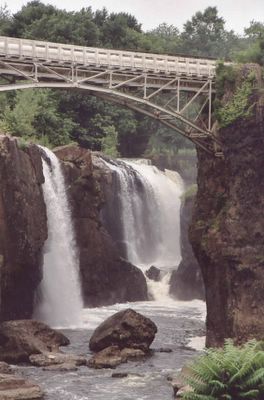
This is by no means a done deal, but here's what the Great Falls National Park would entail:
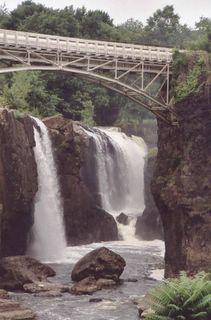
This is by no means a done deal, but here's what the Great Falls National Park would entail:
Specifically, the legislation would create the national park and provide for public participation in its management:Senators Lautenberg and Menendez are both sponsoring the Senate version. The Senate version is still in Committee.
* The National Park would encompass about 109 acres and include the Great Falls National Historic District.
* The Paterson Great Falls National Historic Park Commission would be created to assist and advise the Secretary of Interior Department in the development and implementation of the general management plan for the park.
Membership on the Commission would consist of nine members appointed by the Secretary of the Interior Department
· Four members would be nominated by the Governor of the State of New Jersey
· Two members would be nominated by the City Council of Paterson
· One member would be nominated by the Passaic County Board of Chosen Freeholders
· Two members shall be qualified to serve on the Commission because of their familiarity with national parks and historic preservation.
Members of the Commission will serve three year terms free of pay.
The Natural Resources Committee will now report the Paterson Great Falls Act to the full House of Representatives where it will be considered for a vote on the House floor.
Saturday, July 14, 2007
In the Cross Hairs
New Jersey and corruption are indeed perfect together as ongoing investigations into various politicians continues. However, why is it that the political affiliation of those politicians buried deep into articles?
I completely understand that New Jersey's political scene is heavily tilted towards Democrats - they outnumber Republicans on voter rolls statewide, and Democrats have had strong showings in elections around the state. However, that is not a reason to bury the political affiliations.
It's also a matter of statistics - more Democrats will be the focus of corruption scandals in New Jersey simply because there are more Democrats in office. That should not give them a pass on the issue and voters shouldn't simply write this off as business as usual in New Jersey. Those soft expectations only harm New Jersey's long term fiscal stability and when politicians engage in corruption, bribery, and fraud, they are stealing from taxpayers. It hits you in the pocket.
When Sharpe James helped out one of his girlfriends by giving them a sweet deal on property in Newark, she flipped a small investment and turned it into a profit of hundreds of thousands of dollars. James spread the largess around to his friends and cronies and Newark suffered for it.
UPDATE:
Sharpe James is working the crowds as though he's campaigning to stay out of jail. The paper trail says something quite different. He was giving his friends and cronies sweetheart deals and they profited from the close relationships. Credit cards issued for the City of Newark were used for personal trips and purchases - and never reimbursed.
If he's trying to sway the jury pool with this nonsense, then the prosecutor may well have to seek another venue to assure an impartial jury.
The road doesn't end with Sharpe James' indictment.I've highlighted the political affiliations from the article. We quickly learn that the prosecutor investigating the matters is a Republican, but only later do we learn that most of the targets are Democrats.
Still in the cross hairs of federal prosecutors are a half-dozen members of the state Legislature, including Sen. Joseph Coniglio of Bergen County, as well as U.S. Sen. Bob Menendez of Hoboken and people connected to the University of Medicine and Dentistry of New Jersey in Newark. State Sen. Wayne Bryant, who was in federal court Friday, is awaiting trial.
For those suspected of using taxpayer money for personal benefit, it's an inconvenient truth: More than at any other time in the past three decades, public corruption has been a primary focus of federal and state crime fighters.
"I think scrutiny on corrupt politicians is as intense as it's ever been," said Walter Timpone, a defense attorney and former federal prosecutor. "And politicians ought to be cautious to look carefully at their actions before those actions cause them to cross lines -- either intentionally or unintentionally."
James, the former mayor of Newark and a sitting state senator, is only the most recent public official tagged by U.S. Attorney Christopher J. Christie, a Republican who has netted more than 100 public-corruption convictions in six years, including some of the state's most powerful politicians.
A grand jury indicted James on Thursday on charges of using taxpayer dollars to take lavish trips to exotic locales and charging them to city credit cards. It also charged him with defrauding taxpayers by selling discounted city land for profits -- in part, benefiting a female companion.
Christie was asked whether the former five-term mayor of New Jersey's largest city was his biggest catch.
"We don't rank 'em, we don't rate 'em," he replied. "What I hope it shows is that no matter how long you're in office, no matter how powerful you're perceived to be, that we will chase down every lead. And if we believe we have proof we'll bring cases against you."
The quarry includes Coniglio, a Democrat who lives in Paramus, where he formerly served on the Borough Council. Christie's office is investigating whether the retired plumber used his Senate post to steer more than $1 million in taxpayer dollars to Hackensack University Medical Center at the same time the hospital employed him as a consultant.
Coniglio insists he has done nothing wrong. Asked during a March interview whether he played a role in steering grants to the hospital, he said, "No." He later said, "I don't recall."
Bryant, a Camden County Democrat who sat on the Senate's powerful Budget and Appropriations committee with Coniglio, was indicted in March on charges that he steered millions in state tax dollars to UMDNJ in exchange for a "no-work" job.
His attorney, Carl Poplar, said Friday that no plea deal is on the table, and that Bryant, who has pleaded not guilty, is gearing up for a scheduled January trial.
Others under scrutiny include state Assemblyman Brian Stack, the Democratic mayor of Union City. Prosecutors have subpoenaed records while examining whether he steered taxpayers' dollars to build a park next to his wife's day care center.
Stack and his wife, Katia, have acknowledged that the mayor played a role in grants that also benefited the day-care center that she directs. But they say the money was earmarked for construction -- and, therefore, separate from the director's salary.
The mayor said last spring that he welcomes a complete and thorough review, which he predicted would "put this thing to rest once and for all."
Another Union City property that has attracted Christie's interest is a house owned by Menendez that was rented by a social services agency. Prosecutors are probing whether Menendez, a Democrat, helped secure federal tax money for the agency.
I completely understand that New Jersey's political scene is heavily tilted towards Democrats - they outnumber Republicans on voter rolls statewide, and Democrats have had strong showings in elections around the state. However, that is not a reason to bury the political affiliations.
It's also a matter of statistics - more Democrats will be the focus of corruption scandals in New Jersey simply because there are more Democrats in office. That should not give them a pass on the issue and voters shouldn't simply write this off as business as usual in New Jersey. Those soft expectations only harm New Jersey's long term fiscal stability and when politicians engage in corruption, bribery, and fraud, they are stealing from taxpayers. It hits you in the pocket.
When Sharpe James helped out one of his girlfriends by giving them a sweet deal on property in Newark, she flipped a small investment and turned it into a profit of hundreds of thousands of dollars. James spread the largess around to his friends and cronies and Newark suffered for it.
UPDATE:
Sharpe James is working the crowds as though he's campaigning to stay out of jail. The paper trail says something quite different. He was giving his friends and cronies sweetheart deals and they profited from the close relationships. Credit cards issued for the City of Newark were used for personal trips and purchases - and never reimbursed.
If he's trying to sway the jury pool with this nonsense, then the prosecutor may well have to seek another venue to assure an impartial jury.
Wednesday, May 23, 2007
Corzine Wants Warren Grove Shut Down
Gov. Jon Corzine has announced that he'd like to see the Warren Point Firing Range shut down. An F-16 flying a training mission at the range dropped a flare that started a massive wildfire that blackened over 15,000 acres and damaged or destroyed more than 50 homes.
Unlike Menendez and Lautenberg who have said they'd wait until the investigation is complete and recommendations made, Corzine is already on the next step.
UPDATE:
Former Spook is on the same page as I am when it comes to the readiness, and he's got some interesting information too. If Warren Grove is shuttered as Corzine wants, that means that NJ and PA ANG units would have to fly down to North Carolina to do their training. That's time and money that could be better served by keeping Warren Grove open.
Technorati: warren grove
Gov. Jon S. Corzine on Tuesday called for closing the National Guard bombing range where a massive Pinelands wildfire is believed to have started last week.It would appear that his mind is really made up. He'd like to see it closed. If Warren Grove is closed, where will the Air National Guard conduct its training missions? How would this affect Air National Guard training and readiness? Does that even enter into his political calculations or is he more concerned with the appearance of doing something?
"I will be strongly in favor of its closing," Corzine said.
The fire charred more than 17,000 acres of Pinelands over six days before being declared fully contained Monday. It is believed to have started when a National Guard F-16 fighter on a training run over the Warren Grove Gunnery Range along the Burlington-Ocean county border dropped a flare into dry brush.
"I would like to hear the pros and cons in a rational presentation of the facts, but it's going to be a hard sell to convince me Warren Grove ought to remain open," Corzine said at a news conference at the governor's mansion.
The Air Force has convened an accident investigation board to review the incident. New Jersey's two U.S. senators met Monday in Washington with officials from the National Guard and Air Force, but neither called for closing the range. U.S. Sens. Frank Lautenberg and Robert Menendez said they would wait for the investigation to be completed and review any recommendations to make the range safer.
Air Force Lt. Col. Ellen Krenke, a Defense Department spokeswoman, declined to comment on Corzine's stance.
Unlike Menendez and Lautenberg who have said they'd wait until the investigation is complete and recommendations made, Corzine is already on the next step.
UPDATE:
Former Spook is on the same page as I am when it comes to the readiness, and he's got some interesting information too. If Warren Grove is shuttered as Corzine wants, that means that NJ and PA ANG units would have to fly down to North Carolina to do their training. That's time and money that could be better served by keeping Warren Grove open.
Of course, Corzine doesn't seem to understand that his own troops--the New Jersey Air National Guard--will be among those most affected by the range closure. The beauty of having a training range close-by is just that: it maximizes the time pilots can spend honing combat skills, while minimizing transit time (and the fuel required to get there). New Jersey pilots can probably get required training at other ranges, but it won't be as convenient--or cheaper--than using Warren Grove. We're also wondering if Governor Corzine is prepared to compensate other states in the event that one of his jets crashes--or starts a fire--while using a range in another state. Why should DoD pay for future mishaps, put in motion by Jon Corzine's latest example of political petulance?
Technorati:
warren grove
Monday, April 23, 2007
NJ Politicos Getting Act In Gear For Disaster Relief
More than a week later, New Jersey politicians are finally catching up to their New York brethren. They're finally getting out and about and holding pressers to push for federal disaster relief.
U.S. Sens. Frank Lautenberg and Bob Menendez, both Democrats, and state police Superintendent Rick Fuentes are expected to join acting Gov. Richard Codey for the FEMA meeting. Officials said Paulison might fly over North Jersey.It's quite interesting to watch the difference in how Sen. Schumer has been at the forefront of pushing for disaster relief in New York areas affected by the Nor'easter and the cloak of invisibility that surrounds New Jersey's tag team duo of Lautenberg and Menendez. Those two should have been getting in front of televisions on a nightly basis considering that the worst flooding in the region occurred in New Jersey and the Passaic River is finally falling below flood stage for the first time in a week. Paterson was among the most heavily affected areas, as was Bound Brook, and the local representatives were missing from much of the nightly news broadcasts pushing to ensure that their constituents knew where to go, what to do, and who to deal with to get the information and aid they desperately needed.
Codey on Friday asked Bush, for the second time, to declare parts of the state a disaster area, said Michelle Presson, chief of staff to Rep. Scott Garrett, R-Wantage.
Such a designation would allow the state to get FEMA assistance. It would include help for individuals who lost property and for municipalities whose infrastructure was damaged in the disaster.
Rep. Steve Rothman, D-Fair Lawn, said the state congressional delegation on Friday sent another letter to Bush -- the delegation's second -- urging him to grant the designation. Like Codey's letter to Bush, the congressional missive narrowed an earlier request for a disaster designation across the whole state, to one focused on certain counties. Among them were Bergen, Passaic, Morris and Hudson counties.
"Federal inspectors have been working through the weekend to collect enough data to present Bush so he can issue a disaster declaration by [today[ or Tuesday," Rothman said.
Asked if it appeared that Bush would grant the designation, he said, "I'm hopeful."
Menendez and Rothman are expected to tour flood areas in Lodi. They will meet with Bergen County Executive Dennis McNerney and mayors whose towns were affected by the nor'easter.
Saturday, April 21, 2007
Where Are New Jersey Representatives?
Mrs. Lawhawk had been wondering about this after watching news reports the past few days relating to the flooding in New York and New Jersey. If you look at the reporting about the Nor'easter and the damage done to New Jersey and New York, you too would wonder where New Jersey representatives are in pressing for federal aid to assist those who were flooded out by the Nor'easter.
New York's Senators Schumer and Clinton have been all over the airways. Governor Spitzer has also called for parts of New York to be declared disaster areas.
In contrast, the only voice being heard from New Jersey politicians is Gov. Codey. Where are the state's two senators? Are Lautenberg and Menendez too busy with other business to tour the disaster areas with media in tow and call for federal aid to flow? Where are the members of the House touring the area?
New York's Senators Schumer and Clinton have been all over the airways. Governor Spitzer has also called for parts of New York to be declared disaster areas.
In contrast, the only voice being heard from New Jersey politicians is Gov. Codey. Where are the state's two senators? Are Lautenberg and Menendez too busy with other business to tour the disaster areas with media in tow and call for federal aid to flow? Where are the members of the House touring the area?
Wednesday, January 03, 2007
Tax Tips For Corrupt Politicians
With tax season upon us, Texas Rainmaker posted a thoughtful reminder for politicians like William Jefferson. If you've received a bribe, it must be included as income on your 1040. The same goes for illegal income and kickbacks.
Campaign contributions are generally not considered income unless they are diverted to his or her personal use.
Among those who might need to consider the tax implications of their corrupt deeds: Bob Menendez, anyone involved with UMDNJ, most New Jersey politicians, and the NYC delegation to Albany.
UPDATE:
Indicted Bronx state Sen. Efrain Gonzalez Jr., (D) has stepped down from his leadership post in response to the growing corruption investigation into his activities. If I were him, I'd be consulting a good tax attorney and CPA on top of a good criminal defense lawyer. Joe Bruno (R), make sure you're talking to your CPA as well.
Campaign contributions are generally not considered income unless they are diverted to his or her personal use.
Among those who might need to consider the tax implications of their corrupt deeds: Bob Menendez, anyone involved with UMDNJ, most New Jersey politicians, and the NYC delegation to Albany.
UPDATE:
Indicted Bronx state Sen. Efrain Gonzalez Jr., (D) has stepped down from his leadership post in response to the growing corruption investigation into his activities. If I were him, I'd be consulting a good tax attorney and CPA on top of a good criminal defense lawyer. Joe Bruno (R), make sure you're talking to your CPA as well.
Sunday, December 10, 2006
Reelecting Cold Hard Cash Jefferson
In a runoff election, William Jefferson (D-LA), has won reelection to Congress over Karen Carter with a huge margin in very light turnout.
UPDATE:
Lots of other folks are chiming in on William Jefferson's reelection. Don Surber calls on Pelosi to drain the bayou. Well, I think it isn't up to her to not seat Jefferson, but it is up to the prosecutors and FBI to make their case and put this guy in jail for corruption - and having $90,000 in marked bills sitting in his freezer.
TPM wonders what the Democrat leadership will do about Jefferson. Let's not forget that there are a couple other Democrats with shady stuff hanging about - Menendez in New Jersey, Mollohan in West Virginia being two others off the top of my head. Their solution is to refuse to seat Jefferson and a Florida GOP representative who won a closely contested election on grounds that both are unfit to serve - though there's no reason to believe that the FL GOP candidate is unfit to serve. The Democrats are simply contesting the election that the GOPer, Vern Buchanan, won although there was an apparent undercount in the vote.
Ed Morrissey disagrees with the idea of refusing to seat Jefferson, but it should refuse to reseat anyone on Jefferson's indictment. That doesn't serve anyone either, and it would actually result in the disenfranchisement of those who are in Jefferson's district. Yes, those folks voted for a crook to office and should live with the consequences of their action. However, it should not come at the price of losing their voice in Congress.
Flap's Blog provides some levity.
Others blogging: Assorted Babble, Hot Air, Sister Toldjah, Michelle Malkin, Jo's Cafe, Iowa Voice, Blogs of War, and Blue Crab Boulevard.
Technorati: william jefferson, corruption, bribery, culture of corruption.
Guilty pleas by aides and associates who admitted to bribing the congressman and the revelation in court documents that FBI agents had found $90,000 in marked bills stuffed into Jefferson's freezer had put the scent of blood in political waters.71% to 39%? That's 110% - an obvious misprint. The story here is that incumbency provides huge advantages and it doesn't matter how corrupt the politician is. Jefferson was found storing $90,000 in cold cash in his freezer. Federal investigations are racking up plea deals with associates and he's even acknowledged that an indictment is in his own future.
A field of a dozen candidates began circling Jefferson in the primary. He
finished first, but with only 30 percent of the vote, inspiring conjecture that his performance amounted to repudiation of an incumbent and that he would surely lose the runoff against state Rep. Karen Carter, D-New Orleans.
Instead, Jefferson, 59, scored a dramatic upset by racking up huge pluralities in African African-dominated precincts in Orleans, and winning outright in Jefferson Parish, where Sheriff Harry Lee had spent his campaign.
The final margin for Jefferson in Jefferson Parish was 71% to 39% - a margin that can be attributed to Sheriff Lee's furious political assault in the closing days of the campaign. Lee not only endorsed to Jefferson, but in the final days, urged Jefferson Parish residents to stay home and not vote. The final tally shows that while 28% of registered voters cast ballots in the primary, only 15% voted Saturday.
UPDATE:
Lots of other folks are chiming in on William Jefferson's reelection. Don Surber calls on Pelosi to drain the bayou. Well, I think it isn't up to her to not seat Jefferson, but it is up to the prosecutors and FBI to make their case and put this guy in jail for corruption - and having $90,000 in marked bills sitting in his freezer.
TPM wonders what the Democrat leadership will do about Jefferson. Let's not forget that there are a couple other Democrats with shady stuff hanging about - Menendez in New Jersey, Mollohan in West Virginia being two others off the top of my head. Their solution is to refuse to seat Jefferson and a Florida GOP representative who won a closely contested election on grounds that both are unfit to serve - though there's no reason to believe that the FL GOP candidate is unfit to serve. The Democrats are simply contesting the election that the GOPer, Vern Buchanan, won although there was an apparent undercount in the vote.
Ed Morrissey disagrees with the idea of refusing to seat Jefferson, but it should refuse to reseat anyone on Jefferson's indictment. That doesn't serve anyone either, and it would actually result in the disenfranchisement of those who are in Jefferson's district. Yes, those folks voted for a crook to office and should live with the consequences of their action. However, it should not come at the price of losing their voice in Congress.
Flap's Blog provides some levity.
Others blogging: Assorted Babble, Hot Air, Sister Toldjah, Michelle Malkin, Jo's Cafe, Iowa Voice, Blogs of War, and Blue Crab Boulevard.
Technorati: william jefferson, corruption, bribery, culture of corruption.
Subscribe to:
Posts (Atom)