Showing posts with label 2d Avenue Subway. Show all posts

Wednesday, October 02, 2013

Gov. Cuomo Sets Course For Reelection Campaign With Tax Cut Gambit

Gov. Andrew Cuomo is hoping to win over some voters upstate with a plan that would cut somewhere from $2 to $3 billion in New York State taxes and fees.
In a surprising announcement scheduled for Wednesday morning, Cuomo will appoint former Gov. George Pataki and former Democratic state Controller Carl McCall to head a task force charged with finding ways to cut between $2 billion and $3 billion in taxes next year, a source with ties to McCall said Tuesday night.

Cuomo wants to announce an aggressive tax-cutting plan as he heads into his reelection run next year.

On the face, this makes perfect sense. New York has a reputation as a high tax state, but when you look under the hood, the tax cuts would do New Yorkers a tremendous disservice. There are several high profile projects around the state that are in dire need of funding, and some or all of the money to be cut would go a long way to funding those projects.

I'm talking about critical infrastructure improvements.

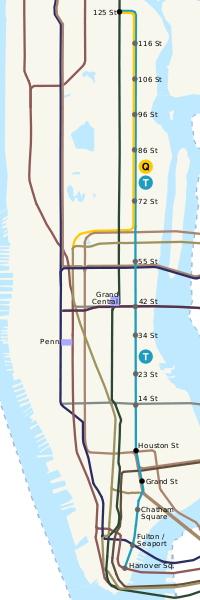
In New York City alone, there's Phase 2 of the Second Avenue Subway that needs to be funded so that the East Side of Manhattan commuters get relief beyond a stub line. Throw in bridge repairs and infrastructure improvements in the wake of Hurricane Sandy, and there's a pretty long list.

Then, there's Gov. Cuomo's pet project - the Tappan Zee Bridge replacement. It's waiting on confirmation of a federal loan program to fund the project, and the state has already borrowed nearly a billion dollars to get the project off the ground.

Upstate infrastructure needs significant investments, including sewer and water treatment facility upgrades, road rebuilding, and bridge repair or replacement.

Instead of cutting these revenue sources altogether, redirect some or all to fund infrastructure projects that will help modernize the state's crumbling infrastructure and to protect its residents from the effects from tropical storms and hurricanes.

Tuesday, August 21, 2012

Developing: Construction Accident At 2d Avenue Subway Project

Reports are coming in that there was some kind of construction accident a few minutes ago at the 2d Avenue Subway construction site at 72nd Street. There was a large plume of smoke and reports of damage to adjoining sidewalks and buildings.

This would appear to be in the vicinity of where a subway station cavern was being carved out by a combination of excavation and explosive demolitions.

There's no word of injuries, but emergency crews are on the scene.

As more information becomes available, I will update.

UPDATE:
Fox 5 is reporting that an overloaded air compressor was involved in the explosion. However, other news outlets, including CBS News, are saying that it was a controlled demolition blast that went awry.

Monday, June 04, 2012

Inside the Second Avenue Subway Construction Site

A video of the construction process, including the tunnel boring machines that are critical to the effort.


It's interesting that they are using one machine, tunneling one bore, and then pulling the machine back to run the second tunnel. That seems to be extremely time consuming and much more costly than had they run two machines simultaneously and allowed the machines to continue running south towards Hanover Square (the 2d Avenue Line's ultimate terminus should it ever be fully funded).

Wednesday, April 04, 2012

MTA Kills 7 Train Proposal To Secaucus, Leaving Gateway As Only Proposed Cross-Hudson Transit Expansion Project

MTA Chairman Joe Lhota has effectively killed any chance for the 7 Train to be extended to Secaucus. He cites the costs of building out the line and the need to build a maintenance yard in New Jersey.

Lhota has a point - the MTA can barely afford its existing system and is already over budget on existing expansion or renovation projects, including the 7 Line extension to the Javits Center, the Second Avenue Subway that is only funded through completion of the phase 1 stub, and the Fulton Street Transit Hub. It can't afford to take on a major undertaking such as the extension to New Jersey without any funding in place.

New York City isn't ponying up the funds, nor is New York State. New Jersey has been open to the idea, particularly after Gov. Christie killed the abortive ARC tunnel project because cost overruns could run from a conservative $1 billion over budget to $5 billion or more, with New Jersey taxpayers on the hook for any overages, but the real transit expansion option is the Gateway tunnel project.

That's not funded to any degree worth speaking about. It barely has enough funding to get to keep the name, despite the critical need to eliminate a bottleneck on the Northeast Corridor and to expand high speed rail for Amtrak and NJ Transit traffic. Amtrak would be the lead agency, which makes sense on an interstate project, but funding is caught up in politics and isn't likely to be in place anytime soon.

Friday, October 28, 2011

Happy Birthday NYC Subways!

On this day in 1904, the NYC subway system opened its first line.

It is now the nation's largest transit system (carrying more passengers than nearly all other transit systems in the nation combined, and that separates out the SI Railway which is part of the MTA and PATH, which runs service in and out of Manhattan).

The MTA subways are the 6th most used system in the world (Tokyo is first), but it has more stations and track miles than nearly every other system on that list.

Since that first line in 1904, the system has grown by leaps and bounds, but no new transit lines have been built in decades. That's changing with the construction of the 2d Avenue Subway, which is actually a long-overdue replacement of an elevated subway line that ran along much of 2d Avenue until it was torn down.

The 7 Line is getting a needed extension to the far West Side, and may eventually burrow across the Hudson River to join up with the Secaucus Transit hub and NJ Transit.

There's lots of other work to be done, but the complexity of the system and that it operates 24/7/365 means that work that other systems could carry out overnight has to be staggered in such a way that it increases the time to complete. Such is the benefit and cost of running such a massive system.

One can only hope that the local and state politicians do a better job of supporting mass transit and the subway system, which remains the heart that pumps the New York City economy.

Friday, September 23, 2011

Major Milestone Reached on 2d Avenue Subway

After decades of proposals and designs and ideas, the MTA has finally finished digging the tunnel for the first segment of the 2d Avenue subway line that will run from 63rd Street up to 96th Street.

Excavation is only the first part of the job. The tunnel needs to be lined, track needs to be laid, and stations, utilities, and ventilation needs to be installed. The FRA isn't quite sure that the MTA will make its deadline for revenue service in 2016, and frankly I don't think they'll make it either. But it is coming eventually.

Now, this is hardly the first time that the MTA has put shovels in the ground to build the line; work began in the 1970s and several blocks worth of tunnel were excavated in the 1970s. Part of that construction will be utilized in phase 2 of the subway expansion from 96th Street to 125th Street, but the reason that the project stopped in the 1970s is a familiar one - financial problems.

The subway line is eventually supposed to stretch up to 125th Street and down to Hanover Square in Lower Manhattan. Yet, there's no funding on the horizon to fully develop the line, and local politicians have been unwilling to set aside sufficient funding for this, which means that the MTA keeps adding to an already crushing debt load - a debt load that will eventually affect revenue service.

It was financial problems that curtailed the 1970s subway expansion effort, and it may again thwart a full buildout of the subway line.

Thursday, July 28, 2011

MTA Hits Up New York City For $250 Million To Continue Capital Projects

The MTA, which announced its intentions to raise fares twice in the next few years has now gone with hat in hand to New York City to ask for $250 million to complete two of the big capital projects that are still underway: the Second Avenue Subway and the East Side Access project.

The agency's theory is that with real estate taxes likely to rise after the projects are completed, the City would recoup any outlays and then some. In effect, this is essentially a roundabout call for tax increment financing to get the deal done (leveraging future tax revenues to pay for capital projects).

The problem is that the City doesn't exactly have the money to spare, and neither does the state. These projects must get completed and delays end up costing everyone billions more down the road.

However, the MTA needs to show that it can control costs on its capital projects better than it has done to date. Had it been able to keep within budget on existing projects like Fulton Street, the 2d Avenue Subway or the South Ferry projects, the agency would have had sufficient funds available to complete the two other projects with money to spare.

This goes back to the way that the projects are bid and calculated but highlights a further need to contain costs within the capital budget to make sure that critical projects are completed on budget and on time.

Monday, June 27, 2011

Second Avenue Subway In Jeopardy Over Lack of Financing

Once again, the oft-delayed Second Avenue Subway is in jeopardy for lack of financing to complete critical contracts for stations along the right of way. Contracts to build out subway stations at 72nd Street, 86th Street, and 96th Street are pending, and the MTA lacks the funds to make that happen.

The state legislature recessed without appropriating any additional money for the project (including for a payroll tax), which means that the MTA and taxpayers will once again have a tunnel to nowhere as happened the last time that the MTA attempted to get the project underway in the 1970s. Then, as now, the MTA was able to build a stretch of tunnel, but the project had to quit after the money ran out.

New York City and the state have reduced funding for the MTA over the past decade, and the MTA has not exactly been a good steward of its projects as costs have spiraled out of control on other key projects. Indeed, the bridges that the MTA oversees are in poor shape, and toll hikes that were meant to improve both mass transit and bridge conditions haven't reaped the promised improvements - particularly so for bridges and tunnels the condition of which is quite poor.

With the financing problems, perhaps the folks on the Upper East Side who are complaining about the dust and construction will find a much improved situation when the money runs out.

Monday, May 09, 2011

Troublesome Security at Rail Tunnels Despite Warnings

This past weekend saw a spate of rail security related incidents that are quite troubling despite years of warnings about inadequate security. Al Qaeda has made it long known that it hoped to attack rail targets around the world, having carried off major attacks in Madrid and London. With the bin Laden raid, the US gathered still more intel about al Qaeda's plans to attack US rail targets perhaps to coincide with the 10th anniversary of the 9/11 attacks.

So the fact that a person was arrested trespassing well into one of the PATH tunnel this weekend, and another group of four people were arrested trespassing in the newly built sections of the Second Avenue subway shows an ongoing problem with security at these tunnels and subway systems. The four arrested in the Second Avenue subway tunnel were carrying Roman candles and were hoping to use the lights to take photos.

However, it's the trespassing incident in the PATH tunnel that is perhaps the more troublesome incident:
Officials said Reymundo Rodriguez, 20, of Bayonne, NJ, had hopped down onto the tracks in a Manhattan PATH tunnel. The station was being patrolled by two Port Authority cops.

Rodriguez then walked the two miles to Jersey City.

A PA contractor, Lee Anderson, spotted him exiting at around 3 a.m. and called police.

"I just put a bomb down on the tracks," Rodriguez allegedly told officers.

The tunnel was shut down while the Joint Terrorism Task Force and bomb-sniffing dogs searched for a device.

Anderson told cops, "I asked him what he was doing in the tracks, and he said, 'The train never came . . . so I decided to walk,' "

Rodriguez also allegedly told him he saw President Obama on TV, "and he told me it was safe to walk through the tunnel."
PATH has been repeatedly targeted by al Qaeda and jihadi groups, including a plot to bomb the tunnel so as to cause flooding within the World Trade Center complex. The Port Authority has undertaken some efforts to bomb-proof the tunnels to minimize the chances of a ruptured tunnel flooding the World Trade Center, but significant damage could still occur.

Still, rail security has lagged security efforts for air travel and random bag searches are the primary security screening measure for PATH and subways, particularly in the NYC metro area. The report doesn't indicate which subway station Rodruguez entered in Manhattan to begin his trek - as it could have been either the WTC station or Christopher street, but either way, he took his life into his own hands as a train could have come through those tunnels without much warning.

Sen. Chuck Schumer has proposed a no-use list for comparing Amtrak passenger manifests with no-fly lists used by airlines, but that's only a fraction of the passengers who use mass-transit systems nationally. It's a good start but there's no comparable lists for the hundreds of thousands of people who take commuter rail systems like NJ Transit, Metro North, or LIRR (in the NYC metro area alone) let alone subway systems like PATH or the NYC subways.

Consider that around 1.5 million people take flights in the US daily. The NYC subways handles more than 5 million daily. PATH handles another 240,000 per weekday.

That's just the millions who ride mass transit systems in the New York City metro area. The situation is even more daunting for mass transit systems nationally.

Yet, considering that PATH and NYC subways have been repeatedly targeted by active terror plots that were thwarted, the ability for individuals to enter the tunnels unauthorized is quite troubling and points to failures to secure those tunnels properly.

Monday, September 27, 2010

Delays Mount on Second Avenue Subway

It's been decades since the Second Avenue Subway was first proposed to replace the elevated line that used to run on the avenue. Construction has finally restarted and the plan was to have the first segment open by 2016.

Well, this is the MTA we're talking about, and delays are now pushing the construction completion date into 2018. The costs have also risen by another $420 million. The delays and costs are interrelated - the more delays, the more the project costs.

Despite the delays and problems, a transit watchdog group has given the MTA a B on a report card scoring the project. The MTA got good marks for communicating project updates with the public and for job creation, but poor marks for keeping within its budget.

That's the most troubling aspect of the project; the delays and cost overruns threaten the completion of the project because the MTA lacks the funds to handle its capital expenditures. Unless the local real estate market turns around, the MTA will be short billions in tax revenues. The MTA isn't getting the subsidies from the state or city it used to (neither the state or city is in any better fiscal shape to make those expenditures either).

Yet, this project is critical to alleviating traffic and congestion on the East Side. It has been for 50 years. That hasn't changed - it's time for the MTA to come up with a way to speed construction and stay within its budget.

Sunday, June 27, 2010

MTA Service Cuts Take Effect; Now What?

The MTA service cuts have taken effect this weekend, including the elimination of two subway routes and dozens of bus routes in an attempt to cut costs while the MTA faces a nearly $1 billion deficit.

For riders, it is a mess, and service cuts means that some riders will have much longer commutes to and from work and greater inconveniences. Fare hikes are out of the question for the moment, but the MTA should face even greater scrutiny in coming years.

The MTA is in the process of expanding the 7 line and building the Second Avenue subway. Those are significant expansions to the MTA subway system - and yet one has to wonder if there's any money in the budget to actually operate those lines. If the MTA can't afford the system it has, how can it afford the expanded system?

No doubt that riders will demand the MTA open and operate the 2d Avenue line when it is supposed to be completed in 2016. But where will that money come from?

That is the multibillion dollar question.

Tuesday, March 23, 2010

Second Avenue Subway Rumblings

Construction is proceeding on the oft-delayed Second Avenue Subway line in Manhattan and that's got people on one stretch of the avenue complaining because the MTA has to move them out of their homes for a few weeks while engineers and workers shore up their buildings.
A survey found 18 buildings need reinforcement to make sure they're not damaged by subterranean blasting, to be followed by the work of a 1000-ton tunnel boring machine.

"These are old buildings," said Michael Horodniceanu, MTA Capital Construction president.

"These are buildings that were built at a time when controls from the Building Department were almost non-existent."

In all, 28 apartments will be cleared out for a month or two, with the state-run agency paying for hotel rooms- plus rents - for displaced residents, officials said.

The rehab and relocation, set to begin next month between E. 93rd and E. 97th Sts., will cost $6 million to $8 million.

"We expect to do everything possible to make sure the impact will be minimal," said Horodniceanu.

The first 1.7 mile stretch of the new line will run from 96th Street to the Lexington Avenue station at 63rd Street and is on target to be done in 2016.
It's amazing that the same people who would benefit most from this work once its done are complaining about the nature of the work and that their lives are currently being disrupted by the work.

Second Avenue Sagas has more on the construction and the blasting needed to prepare a site for the launch of a tunnel boring machine that will eat through the rock beneath the street and construction a significant portion of the line.

Saturday, December 12, 2009

Complaints Rising Over Second Avenue Subway Construction

This is yet another example of the hurdles that major infrastructure projects that have to overcome. Residents affected by the Second Avenue Subway on the Upper East Side are complaining that dust coming from the construction sites is causing respiratory issues and that the underground work has caused structural issues for some buildings. The community is busy griping, even as they clamored for the construction.

The project had been in the works for 40 years, and is finally moving ahead for the first time in 30 years, and yet some people can't seem to realize that doing nothing is worse.

Doing nothing is not an option; and the short term discomfort from the construction will be more than made up once the construction is completed on the latest segment.

There are also questions over why ventilation buildings are necessary, and that they are somehow ugly. The new subway will have climate control; something missing from nearly every other station in the NYC subway system. The ventilation buildings will eliminate the need for grates on the sidewalks, which allow water to pour in, particularly during flooding rains. It's a small price to pay for a more reliable and comfortable system.

And yet, people gripe about that too.

It's little wonder that the nation is incapable of building major infrastructure projects that would improve communications, transportation, and improve efficiencies, particularly in densely populated urban areas.

Wednesday, August 19, 2009

Infrastructure Neglect Imperils Commuters


This past weekend, a partial roof collapse of the 181st Street station in Manhattan collapsed, causing a shutdown of the busy 1 line through uptown Manhattan. Shuttle service was being provided, but it highlights the problems with maintaining mass transit.

Another partial collapse of the roof occurred in 2007, and yet no work was undertaken to make repairs. In fact, this current roof collapse occurred adjacent to the original roof collapse from 2007.

This photo from the New York Times shows the location of both, and while we're lucky that no one was injured, it shows the fragility of a mass transit system that in many places is 100 years old.
“There had been a failure of the brick at that location,” said Judith M. Kunoff, the chief architect for New York City Transit. “So you knew that at that specific location, it had been compromised.”

Scaffolding was put up, but it does not appear that any repairs were made. Why had part of the ceiling collapsed in 2007?

Ms. Kunoff said it had happened before she was hired, and Charles Seaton, a spokesman for the transit system, said on Tuesday that he couldn’t get an explanation from other officials who were busy with fresher calamities.

“It was identified as a localized failure in 2007,” Mr. Seaton said. “Certainly, that prompted our interest in further inspecting and repairing that ceiling.”

A master repair plan was drawn up, but the funds for it and other capital projects were not approved by the State Legislature until Friday, Mr. Seaton said. Two days later, the ceiling fell in again at 181st Street — possibly because underground water had seeped behind the brick, he said.
It is a multi-billion dollar system and it requires significant capital to maintain the system in good repair. That means that after a period of time, critical elements must be replaced because they simply wear out or become unable to handle the stresses of daily operation.

In this case, we've got the MTA failing to prioritize repairs so that further problems could be mitigated before they caused a closure.

Now, remember that there are hundreds of miles of tracks and more than 200 stations that must require constant attention to prevent problems. Routine maintenance can minimize problems from getting out of hand, but major renovations are needed as well.

Instead of making sure that the MTA dedicated existing funds to maintaining the operation, Mayor Bloomberg has pushed ahead with both the 7 line expansion and the often-delayed 2d Avenue Line. The money might be there to get them built, but what about maintenance for those new subway lines? That goes unanswered, and it's a failure of political will for generations of politicians in the City. It's far more exciting to unveil a new rail line than to undertake the mundane rehabilitation of a subway system.

Even now, the capital budget for the MTA skimps on maintenance and periodic upgrades and rehabilitation of decrepit infrastructure, and that's with an infusion of federal funds, much of which is tasked to the expansion of the subway system - not its maintenance, which raises the question of where the money will come from to maintain the newly expanded system.

Tuesday, July 21, 2009

Second Avenue Subway Setback

It should come as no surprise that the MTA has once again announced that the completion of the first phase to the new Second Avenue Subway is being pushed back to 2016 or 2017 (depending on how optimistic you want to be).
The Metropolitan Transportation Authority has finished an in-depth analysis of the work schedule, budget and potential hurdles for the long-awaited addition to the system, sources told the News.

The conclusion: the official completion date for phase one of the project should be pushed from June 2015 to December 2016, with possible future delays placing the opening in the summer of 2017, the sources said.

And, the Long Island Rail Road's extension to Grand Central Terminal - most recently set to be finished in February 2015 - is now expected to be ready for use in September 2016, according to sources familiar with the analysis.
These are two of the three major MTA capital improvement projects underway (the third is the Fulton Street Transit hub). All are in a state of delay, and all are over budget.

Mind you that the Second Avenue subway line was supposed to reach from Harlem all the way to Lower Manhattan, but this first phase only goes as far as 96th Street and connects with the Q line at 63rd Street. The full run of the line isn't going to be built for more than a decade, if at all.